Topographic Surveys for Planning Permission: A Complete Guide
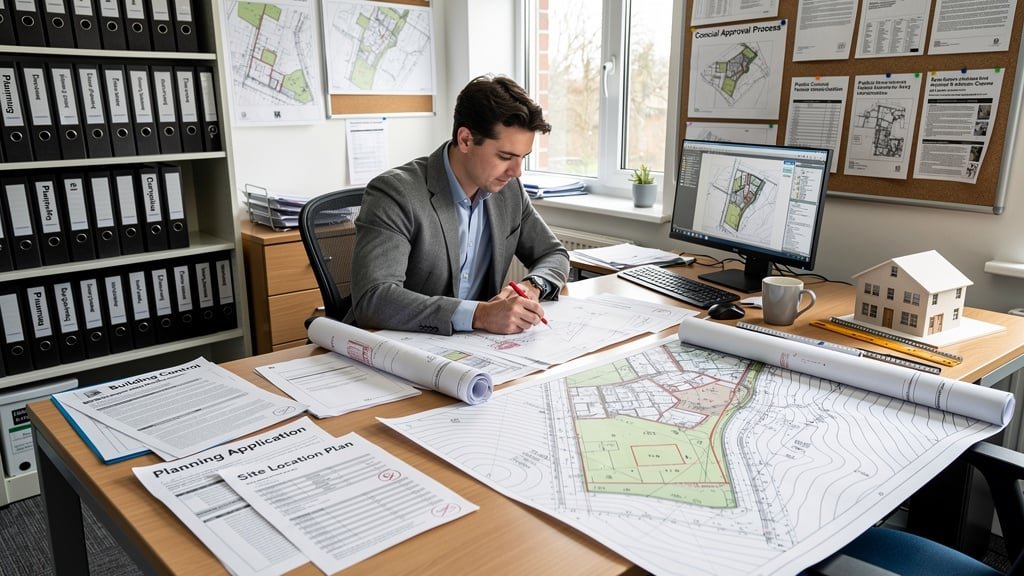
When applying for planning permission in the UK, local authorities typically require a topographic survey as part of your submission. Whether you're planning a house extension, new build development, or commercial construction project, understanding what survey data you need and how to present it can make the difference between approval and rejection. This comprehensive guide explains everything you need to know about topographic surveys for planning permission applications.
Why Do Local Authorities Require Topographic Surveys?
Planning permission exists to ensure that new developments are safe, appropriate, and in harmony with their surroundings. Local authorities need detailed information about the existing site conditions to make informed decisions about proposed developments. A professional topographic survey provides this crucial data.
Local authorities use topographic survey data to assess several key factors. First, they need to understand the natural topography of the land—the contours, elevation changes, and drainage patterns. This information helps them evaluate whether your proposed development will cause issues like flooding, either on your site or neighbouring properties.
Second, they need to see how your development fits within the existing context. The topographical survey shows natural and man-made features including trees, buildings, roads, walls, fences, and utilities. This helps planning officers assess the impact of your development on the surrounding area and whether it complies with local planning policies.
Third, accurate survey data is essential for assessing technical aspects of your proposal. Architects and engineers use the topographic data to design appropriate foundations, drainage systems, and access routes. Without accurate survey information, costly mistakes could occur during construction, leading to project delays and additional expenses.
What Type of Survey Do You Need for Planning Permission?
For most planning applications, you'll need a topographic land survey (also called a topographical survey or topo survey). This survey provides a detailed two-dimensional representation of the site showing both horizontal positions and vertical elevations of features.
Standard Topographic Survey Components
A typical topographic survey for planning permission will include:
- Site boundaries: Precise measurements of property lines and boundaries, often referenced to Ordnance Survey coordinates
- Contour lines: Lines showing points of equal elevation, typically at 0.5m or 1m intervals depending on the size and topography of the site
- Spot levels: Specific elevation measurements at key points across the site, particularly important for drainage design
- Buildings and structures: Existing buildings, walls, fences, sheds, and other built features with their dimensions and positions
- Natural features: Trees (with species and trunk diameter noted), hedges, watercourses, ponds, and significant vegetation
- Hard surfacing: Roads, paths, driveways, and paved areas
- Services and utilities: Visible manholes, inspection covers, telegraph poles, and other utility infrastructure
- Adjacent features: Relevant features on neighbouring land that might affect your development
Survey Scale and Level of Detail
The scale and level of detail required will depend on your development type and size. Most residential planning applications need surveys at 1:200 or 1:500 scale. Larger sites might use 1:1000 scale, while detailed designs for extensions might require 1:100 or 1:50 scale drawings.
Your architect or designer will advise on the appropriate survey specification, but professional topographical surveyors can also guide you based on their experience with similar planning applications in your area.
The Topographic Survey Process for Planning Applications
Step 1: Initial Consultation and Quotation
Contact a professional survey company early in your planning process. Ideally, commission your survey before your architect starts detailed design work, as they'll need the survey data to create accurate plans. During the initial consultation, the surveyor will ask about:
- The property address and site access arrangements
- The approximate area of land to be surveyed
- What you're planning to develop
- Any specific requirements from your architect or planning consultant
- Your timeline for the planning application
Based on this information, they'll provide a detailed quote. Topographic survey costs typically range from £500 for small residential plots to £3,000+ for larger or more complex sites. The price depends on site size, accessibility, complexity of features, and the level of detail required.
Step 2: Site Survey
Professional land surveyors will visit your site to carry out the survey using highly specialised survey equipment. Modern topographical surveys typically use:
- Total stations: Electronic instruments that measure angles and distances with extreme precision
- GPS equipment: Accurate GPS receivers that provide coordinates tied to the Ordnance Survey National Grid
- Laser scanners: For complex sites, 3D laser scanning can capture millions of data points quickly
- Drone survey technology: Aerial surveys using drones for large sites or areas with difficult access
The survey team will measure and record all relevant features. For a typical residential plot, the field survey might take half a day to a full day, depending on size and complexity. Larger sites or those with many features will take longer.
You don't necessarily need to be present during the survey, but it's helpful if someone can provide access to the property and answer any questions about features or boundaries.
Step 3: Data Processing and CAD Drawing Production
After the field survey, the survey data is processed using specialized software to create detailed CAD drawings. This typically takes 5-10 working days, though rush services are available for urgent planning deadlines.
The CAD drawings will show all measured features in plan view, with contour lines and spot levels clearly marked. Most surveyors provide drawings in multiple formats:
- PDF format: For viewing and printing
- DWG or DXF format: Native CAD formats that architects can work with directly
- Paper copies: If required, though digital delivery is now standard
Step 4: Survey Review and Clarifications
Review the survey results carefully with your architect. Check that all relevant features are included and that the survey covers the entire area needed for your development. Professional surveyors will clarify any questions and can return to site if additional measurements are needed.
Using Your Topographic Survey for Planning Permission
Creating Your Site Plan
Your architect will use the topographic survey as the base for creating your planning application drawings. The "existing site plan" (sometimes called "location plan" or "site context plan") shows the site as it currently exists, based directly on the survey.
The "proposed site plan" then shows the same survey base with your proposed development overlaid. This allows planning officers to see exactly where new buildings, extensions, or alterations will sit in relation to existing features, boundaries, and levels.
Drainage and Landscaping Plans
The elevation data from your topographic survey is crucial for drainage design. Engineers use the contour lines and spot levels to plan surface water drainage, ensuring water flows away from buildings and doesn't cause flooding issues.
For developments requiring landscaping plans, the survey provides the base data for showing existing and proposed ground levels, trees to be retained or removed, and new planting areas.
Flood Risk Assessment
If your site is in an area with potential flood risk, your topographic survey provides essential data for flood risk assessment. The elevation of the land relative to water courses and surrounding areas helps specialists assess vulnerability and design appropriate mitigation measures.
Common Planning Permission Scenarios and Survey Requirements
House Extensions
For single-storey or two-storey extensions, you typically need a topographic survey of your house and immediate garden area, extending far enough to show relationship to boundaries and neighbouring properties. The survey should show:
- Existing house footprint and dimensions
- Garden boundaries and dimensions
- Ground levels around the house
- Trees within or close to the extension footprint
- Drainage features including manholes and gullies
- Neighbouring buildings if close to boundaries
New Build Development
For new build projects, whether single dwellings or larger developments, you need a comprehensive topographic land survey of the entire site plus a buffer zone showing surrounding features. Requirements typically include:
- Full site coverage with detailed contours
- All existing structures to be demolished
- Trees with survey including size and species (may require separate tree survey)
- Access roads and footpaths
- Underground services where visible
- Watercourses, ponds, or other water features
- Ecological features if environmentally sensitive
Commercial and Industrial Developments
Commercial projects often require more detailed surveys with additional information:
- Precise levels for large area paving and loading bays
- Detailed drainage mapping
- Service routes and capacities
- Access and highway information
- Parking and circulation areas
- Boundary details including ownership information
Change of Use Applications
Even when not altering buildings, change of use applications may require topographic surveys to show:
- Existing site layout and access
- Parking provision and circulation
- External storage or activity areas
- Boundary treatments and security measures
Working With Your Architect and Survey Data
Effective collaboration between your surveyor and architect ensures the best results. Here's how to facilitate smooth cooperation:
Early Involvement
Commission your topographic survey before your architect begins detailed design work. This prevents delays and ensures designs are based on accurate land data rather than assumptions that might prove incorrect.
Specify Requirements Clearly
Your architect can provide the surveyor with a specification detailing exactly what features need measuring and what level of detail is required. This ensures the survey includes everything needed for the planning application without unnecessary extras that increase costs.
Digital Data Exchange
Ensure your surveyor provides CAD drawings in formats your architect can use. Most architects work with AutoCAD (DWG format), but some use other software. Clarify format requirements upfront to avoid conversion issues.
Coordinating Updates
If site conditions change between the survey and planning submission (trees removed, buildings demolished, etc.), inform both surveyor and architect. You may need an updated survey to reflect current conditions.
Cost-Saving Tips for Planning Survey Requirements
While professional surveys are essential investments, you can manage costs effectively:
- Define scope accurately: Only survey the area needed for your development plus reasonable buffer zone
- Combine surveys: If you need other specialist surveys (tree surveys, drainage surveys), coordinate with your topographic surveyor for potential cost savings
- Choose appropriate detail level: More detail costs more. Discuss with your architect what's actually needed
- Clear site access: Overgrown vegetation or obstructed areas can slow surveyors down and increase costs
- Group projects: If neighbours are also planning developments, consider coordinating surveys
- Plan timing: Rush surveys cost more. Allow adequate time in your project program
What Happens If Your Survey Reveals Issues?
Sometimes topographic surveys reveal unforeseen issues that affect your development plans:
Level Differences
Significant level changes across your site might require more extensive groundworks than anticipated, affecting project costs and feasibility. Your architect can redesign to work with the natural contours, potentially creating a more interesting scheme.
Boundary Discrepancies
Surveys sometimes show that assumed boundaries don't match legal boundaries. This needs resolving before proceeding with planning applications, possibly requiring a separate boundary survey and legal advice.
Drainage Problems
Survey data might reveal poor drainage or watercourses not previously apparent. These need addressing in your development plans to avoid creating flooding issues.
Protected Features
The survey might identify trees with preservation orders or other protected features that constrain your development. Early identification allows redesign before investing heavily in planning applications.
Common Mistakes to Avoid
Learning from others' errors can save time and money:
- Using old surveys: Sites change. Surveys more than a year or two old may not reflect current conditions
- Insufficient survey area: Surveying only your plot without showing context can lead to planning refusal
- Wrong survey type: Using a simple measured survey when a full topographic survey is needed
- Ignoring levels: Assuming flat sites when significant level changes exist
- DIY surveys: Local authorities typically require surveys by qualified professionals
- Late commissioning: Ordering surveys after design work is complete can cause expensive redesigns
After Planning Permission: Using Surveys During Construction
Your topographic survey continues being valuable after planning approval:
Building Regulations
The same survey data supports Building Regulations applications, particularly for drainage and foundation design.
Construction Setting Out
Builders use survey control points from your topographic survey to accurately position new buildings on site. Your surveyor can provide setting out services to establish exact building locations.
As-Built Records
After construction, an updated survey creates as-built records showing the completed development, useful for future alterations or property sales.
Conclusion
A professional topographic survey is an essential foundation for successful planning permission applications. By providing accurate land data showing natural and man-made features, elevation changes, and site context, these surveys enable architects to create appropriate designs and help local authorities make informed decisions.
Investing in a quality survey from experienced topographical surveyors using modern surveying technology pays dividends throughout your project. It prevents costly mistakes, supports efficient design, satisfies planning requirements, and provides valuable data for construction and future reference.
Whether you're planning a simple house extension or a major development project, start with a professional topographic survey. Contact qualified land surveyors early in your project planning to discuss your survey needs and ensure your planning application has the strong foundation it needs for success.
Need a Topographic Survey for Planning Permission?
Our experienced team of land surveyors provides comprehensive topographic surveys for planning applications across the UK. We're members of CIOB, RICS, and RPSA, ensuring professional service and accurate CAD drawings that meet local authority requirements.
Get Your Free Quote